

Search “low-impact exercise for joint pain” and you’ll find a lot of overlapping lists — walking, swimming, cycling, yoga, repeat. What’s less common is an honest look at which of those actually have solid evidence behind them, which are more “sounds reasonable” than proven, and where people tend to waste time or money on options that don’t move the needle much. Here’s that breakdown.
Well-Supported: Where the Evidence Is Strongest
A handful of low-impact options have consistent research behind them for joint conditions like osteoarthritis, and they’re worth prioritizing over less-studied alternatives.
Aquatic Exercise
Water-based exercise has some of the most consistent research support of any low-impact option for joint conditions, particularly osteoarthritis. The buoyancy reduces joint load by roughly 90% while still delivering measurable improvements in pain and function. If you have pool access, this is genuinely one of the highest-evidence choices available.
Resistance / Strength Training
Strengthening the muscles around a joint is one of the more robustly supported interventions for reducing joint load and pain, particularly at the knee. This is worth emphasizing because a lot of people avoid resistance work out of fear it’ll aggravate a painful joint, when in most cases — done at an appropriate light intensity — it’s one of the more evidence-backed things you can do.
Walking
Plain walking has a long track record of supporting joint mobility and general health, and it’s the most accessible option on this list by a wide margin. Its evidence base is strong for general joint health, though it’s less targeted than aquatic exercise or resistance training for people with more significant joint damage.
Reasonably Supported, But Often Overhyped
These aren’t bad choices — they’re just often oversold as more essential than the evidence strictly requires.
Yoga
Gentle yoga has reasonable support for flexibility and stress reduction, both of which indirectly benefit joint pain. But it’s often marketed as a primary joint-pain treatment when the evidence is really stronger for it as a supporting practice alongside strength training or aquatic exercise, not a replacement for either.
Cycling
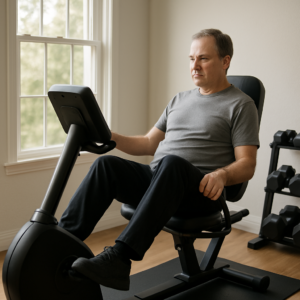
Cycling is genuinely low-impact and a reasonable cardio option, but its specific evidence for joint pain relief is thinner than walking or aquatic exercise. It’s a fine choice if you enjoy it or have knee issues that make walking uncomfortable, but it’s not clearly superior to the higher-evidence options above.
Where People Waste Time or Money
A few common purchases and habits sound helpful but don’t have much specific evidence behind them for joint pain relief on their own:
- Expensive “joint-specific” fitness classes marketed heavily toward joint pain often deliver the same general benefit as ordinary low-impact movement at a fraction of the cost — the marketing outpaces the differentiation.
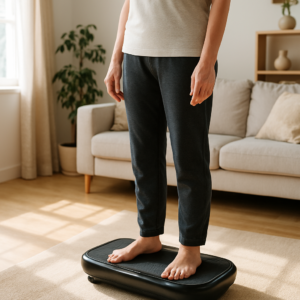
- Vibration platforms and passive “shaking” devices that claim to build strength without active effort have limited evidence for genuine joint benefit compared to actual resistance training.
- Extended stretching-only routines with no strength component may improve flexibility but do little for the muscular support that actually protects joints under daily load.
The Practical Takeaway
If you’re prioritizing based on evidence rather than marketing, aquatic exercise and resistance training deserve top billing, walking is the easiest to sustain long-term, and yoga and cycling are worthwhile additions rather than primary interventions. Recovery tools like foam rolling won’t replace any of the above, but they support consistency by reducing the soreness that often causes people to quit.
Foam Rolling: Supporting Consistency, Not a Primary Intervention
To be direct about where this fits in the evidence picture: foam rolling isn’t going to move the needle on joint pain the way aquatic exercise or resistance training will. Its real value is in reducing next-day soreness enough that you actually show up for the exercises that do have strong evidence behind them.
What works
- Reduces muscle tightness and improves short-term circulation in tissue surrounding a joint, which can make the higher-evidence exercises above more comfortable to perform.
- A multi-density surface adapts to different muscle groups without needing multiple tools.
What doesn’t
- Don’t mistake this for a primary treatment — if your time or budget is limited, put it toward pool access or resistance bands first, and treat foam rolling as the add-on.
- Rolling directly over a painful joint (rather than the surrounding muscle) isn’t supported and can aggravate things — target the muscle, not the joint itself.
Use it as a consistency tool, not a substitute for the exercises with the stronger evidence base above. Check out the 321 Strong Foam Roller — Medium Density Deep Tissue Massager if you want an approachable option to start with.
About This Article

Written by Michael Torres. Michael Torres has had joint problems his whole life — hypermobile as a kid, chronic sprains and a dislocating shoulder through his twenties, an osteoarthritis diagnosis in his early fifties, and a right knee replacement since. He is not a doctor or a physical therapist and has no clinical training. He writes about what has helped him and what he has watched help the people around him, and says plainly when he has not tried something himself. More about this site.
Scope and limits. Michael has no medical or clinical training — he writes about living with his own joint pain, not about treating anyone else's. Nothing here is medical advice. Talk to a doctor before starting anything new, and get seen promptly for pain that is new, severe, worsening, or comes with swelling, fever, or numbness.
Verify this against a primary source
Specifics change, and your situation may differ from the one described here. These are the authorities worth checking directly:
- NIAMS — arthritis and musculoskeletal research from the NIH
- MedlinePlus — plain-language medical reference from the NIH
- Arthritis Foundation — condition guides and treatment overviews