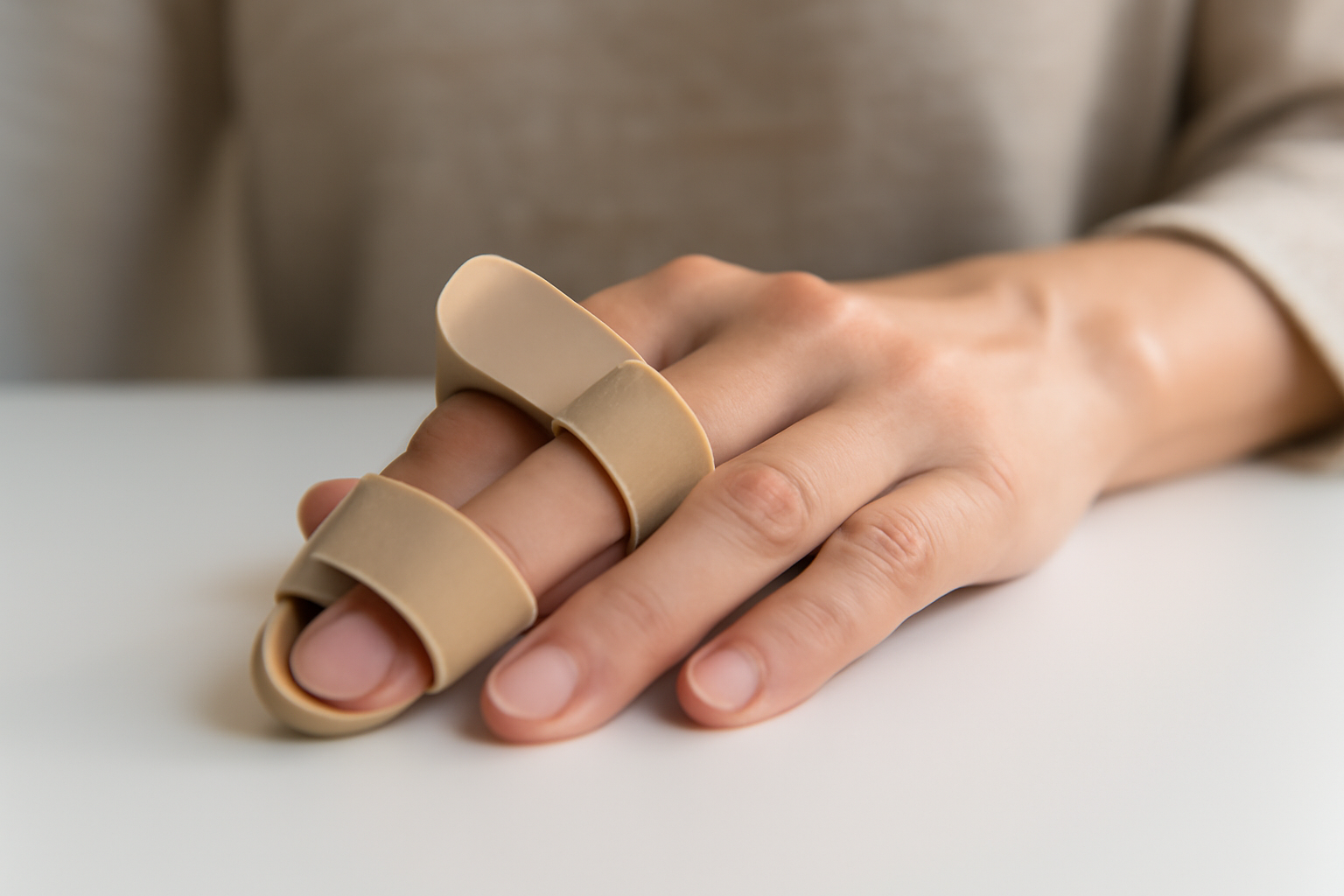

This content is for informational purposes only and does not substitute for professional medical advice. Always consult a qualified healthcare provider before beginning any treatment for trigger finger or trigger thumb.
Quick Summary: Trigger Finger Splint Wearing Schedule
- Nighttime splinting is considered the cornerstone of conservative trigger finger treatment, preventing tendon compression during sleep-related finger flexion.
- Daytime splinting is recommended during repetitive gripping, typing, or tool use — particularly when nighttime-only use has not produced sufficient improvement.
- Research published in the Journal of Hand Surgery supports consistent splinting for six weeks or more as a first-line intervention for mild to moderate stenosing tenosynovitis.
- Trigger thumb responds especially well to splinting and should be addressed with a thumb-specific design that immobilizes the correct joint.
- Inconsistent or short-term splint use produces significantly less benefit than committed daily wear over a structured six-to-eight-week protocol.
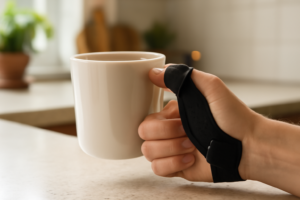
Waking up with a locked or stiff finger — one that must be manually coaxed straight before the first cup of coffee — is a hallmark symptom of trigger finger (stenosing tenosynovitis). One of the most effective and accessible non-surgical interventions is a properly fitted splint worn on a consistent schedule. The challenge most patients face is not finding a splint — it is knowing exactly when and how long to wear it for meaningful results.
What Is Trigger Finger and Why Does Splinting Help?
Stenosing tenosynovitis occurs when the tendon sheath surrounding the flexor tendon of a finger or thumb becomes inflamed and narrowed. The tendon can no longer glide smoothly through the A1 pulley — a ring-like structure at the base of the finger — causing the characteristic catching, clicking, or locking motion. The thumb is among the most frequently affected digits, which is why trigger thumb is often discussed as a separate clinical presentation.
A splint addresses this mechanism directly by holding the affected digit in a neutral or mildly extended position. When the joint is prevented from repeatedly flexing — whether during sleep or aggravating daytime activities — the tendon sheath receives sustained rest, allowing inflammation to subside. The American Academy of Orthopaedic Surgeons (AAOS) recognizes splinting as a standard first-line conservative treatment for trigger finger, particularly in the early stages of the condition. Clinicians working in hand therapy settings frequently observe that patients who commit to a structured splinting protocol report meaningful symptom improvement before any injection or surgical intervention becomes necessary.
When Should You Wear a Trigger Finger Splint? Night vs. Day Use Explained
Does Wearing a Splint at Night Help Trigger Finger and Trigger Thumb?
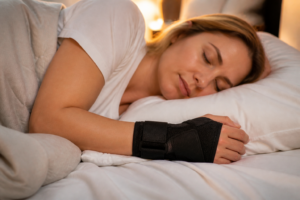
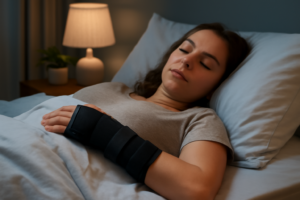
Nighttime splinting is widely considered the single most important component of a conservative trigger finger protocol. During sleep, the fingers naturally adopt a flexed position, keeping the flexor tendon in a compressed and shortened state for six to eight hours continuously. This prolonged flexion is a primary driver of the severe morning stiffness and locking that many patients describe. By maintaining the digit in a neutral or slightly extended position overnight, patients provide the tendon sheath with its longest uninterrupted rest window of any 24-hour period.
Research published in the Journal of Hand Surgery supports nighttime splinting as a clinically meaningful intervention for mild to moderate stenosing tenosynovitis, with the greatest benefit seen when the splint is worn for six weeks or longer without interruption.
When Should Daytime Splinting Be Added to the Protocol?
Daytime splinting becomes clinically indicated when symptoms are more severe — specifically when the finger locks during normal functional activities, when gripping produces significant pain, or when nighttime-only use has not produced sufficient improvement after two to four weeks. Licensed occupational therapists and hand specialists typically recommend wearing the splint during high-friction activities such as prolonged typing, gripping power tools, gardening, weightlifting, or any repetitive hand task that places load on the flexor tendon.
Orthopedic specialists note an important balance: excessive all-day immobilization can lead to stiffness in the proximal interphalangeal (PIP) and metacarpophalangeal (MCP) joints. The optimal approach for most people is a combination strategy — consistent nightly use paired with targeted daytime use during symptom-provoking activities, rather than continuous wear throughout every waking hour.
What Is the Recommended Trigger Finger Splint Wearing Schedule?
The following structured framework is consistent with protocols commonly used in hand therapy:
- Weeks 1–2: Wear the splint every night without exception. Add daytime use during any activity involving repetitive gripping or bending of the affected digit. The primary goal during this phase is maximum tendon rest.
- Weeks 3–6: Continue nightly use consistently. Daytime use becomes more targeted — worn during symptom-provoking activities or during flare-ups rather than continuously.
- Weeks 6–8: Reassess symptoms. If significant improvement has occurred, patients may begin a gradual wean, typically reducing daytime use first while maintaining nightly wear.
- If symptoms return: Resume the full protocol. Many individuals with trigger finger experience cyclical flare-ups and benefit from keeping a splint accessible for months following initial treatment.
In general, intermittent or short-term splint use produces substantially less clinical benefit than committed daily wear. The tendon sheath requires sustained, repeated periods of rest — not isolated breaks — to reduce inflammation meaningfully.
Should Trigger Thumb Be Treated With a Splint?
Yes — and clinical evidence suggests the thumb responds particularly well to splinting due to its high daily use and the accessibility of the A1 pulley to external immobilization. Hand specialists routinely recommend thumb splinting as a first-line conservative measure before considering corticosteroid injection or surgical release. Patients with trigger thumb should use a splint specifically designed for the thumb joint or a universal splint with a dedicated thumb extension, as standard finger splints will not adequately immobilize the correct anatomical structures. The same six-to-eight-week wearing schedule applies.
The Splint That Actually Stays Put During Sleep (When Nighttime Wear Is Your Best Shot)
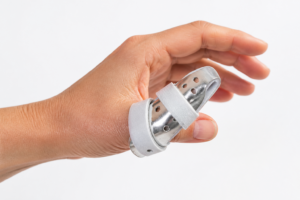
Nighttime splinting is where most trigger finger cases see real progress, but only if the splint stays in place and keeps your finger extended while you sleep—which rules out anything flimsy or uncomfortable enough to yank off at 2 a.m. The Vive Trigger Finger Splint is built for staying put and letting your tendon rest when it matters most.
What works
- Stays secured through the night without slipping or rotating—the aluminum stay holds position reliably, which is critical since every time the splint shifts, you lose the benefit of that resting period.
- Research supports 4–12 weeks of consistent nighttime splinting as a first-line treatment for mild-to-moderate trigger finger, and this design makes compliance actually feasible (you won’t wake up frustrated and ditch it).
- The fabric is breathable and doesn’t cause the heat buildup or skin irritation that comes with cheaper neoprene alternatives—comfort matters when you’re wearing something for 8 hours straight.
What doesn’t
- A splint alone won’t fix trigger finger if you keep aggravating the tendon during the day—daytime activity modification (resting the affected finger, avoiding repetitive gripping) is non-negotiable, or you’re fighting a losing battle.
- Results take patience; most people don’t notice real improvement until 3–4 weeks of consistent nightly wear, and some cases (especially severe ones with locking) need corticosteroid injections or physical therapy alongside splinting.
A splint is a tool for resting an inflamed tendon, not a cure—if you’re not addressing what caused the inflammation in the first place, you’ll likely be back to square one once you stop wearing it. Check out the Vive Trigger Finger Splint if nighttime immobilization is your starting point.
About This Article

Written by Michael Torres. Michael Torres has had joint problems his whole life — hypermobile as a kid, chronic sprains and a dislocating shoulder through his twenties, an osteoarthritis diagnosis in his early fifties, and a right knee replacement since. He is not a doctor or a physical therapist and has no clinical training. He writes about what has helped him and what he has watched help the people around him, and says plainly when he has not tried something himself. More about this site.
Scope and limits. Michael has no medical or clinical training — he writes about living with his own joint pain, not about treating anyone else's. Nothing here is medical advice. Talk to a doctor before starting anything new, and get seen promptly for pain that is new, severe, worsening, or comes with swelling, fever, or numbness.
Verify this against a primary source
Specifics change, and your situation may differ from the one described here. These are the authorities worth checking directly:
- NIAMS — arthritis and musculoskeletal research from the NIH
- MedlinePlus — plain-language medical reference from the NIH
- Arthritis Foundation — condition guides and treatment overviews