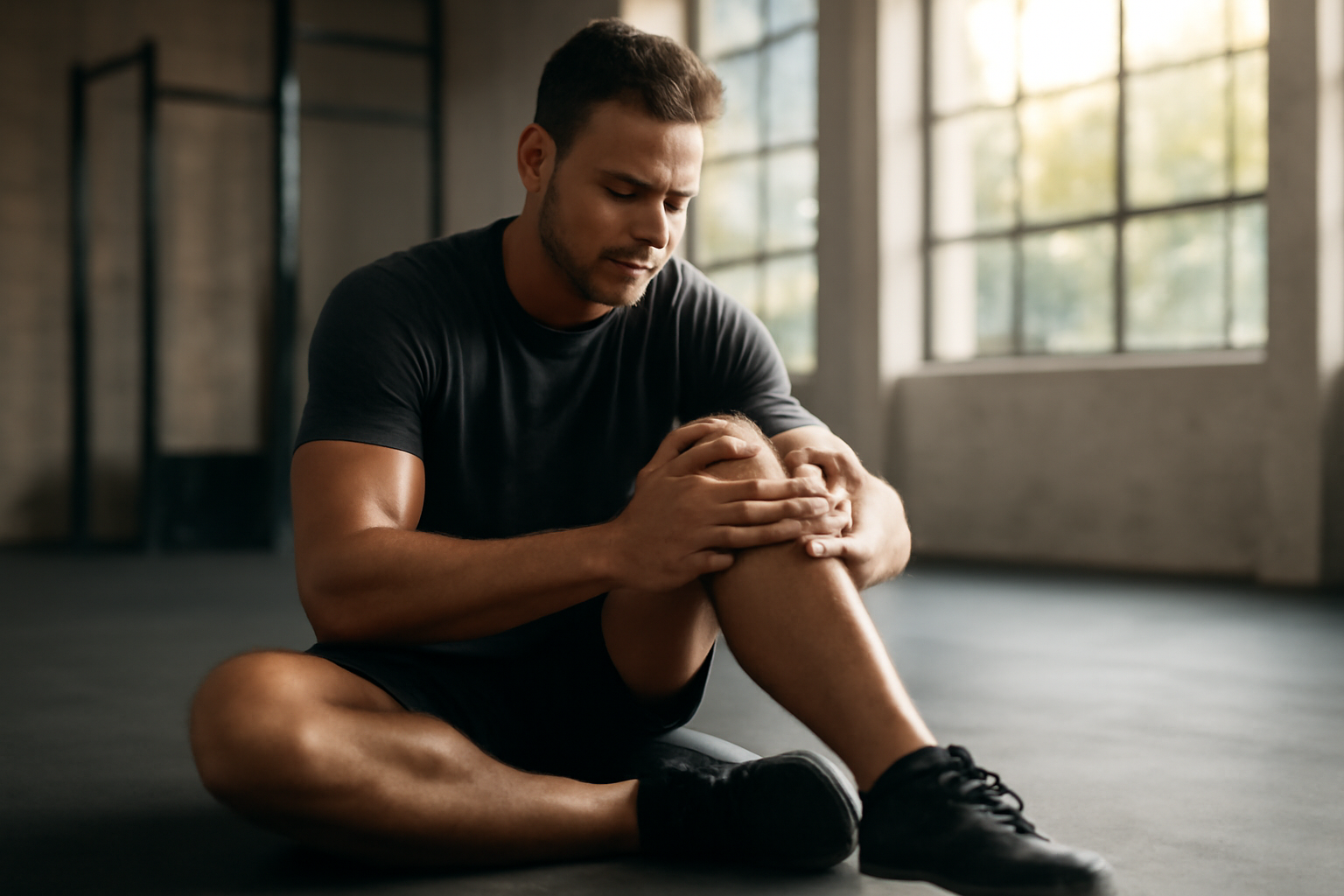

You crushed your workout. You felt great afterward — maybe even a little proud. Then you woke up the next morning and your knees ached going down the stairs, your shoulders felt stiff reaching for your coffee, or your hips protested every time you stood up from your chair. Sound familiar? If you’ve ever experienced joint pain after workout sessions, you’re not alone — and you’re definitely not broken. This is one of the most common concerns I hear, and the good news is that most of the time, there are real, practical explanations and real solutions.
What’s Actually Happening in Your Joints During Exercise
First, let’s get one thing straight: not all post-workout joint discomfort is the same, and it doesn’t all mean something is wrong. Your body is a pretty intelligent system, and what feels like “joint pain” can actually have several different sources.
When you exercise — especially with resistance training, running, or high-impact activity — you’re placing mechanical stress on your joints, tendons, ligaments, and the cartilage that cushions everything together. Some of that stress is necessary and productive. It’s how your body gets stronger and more resilient over time. But when that stress exceeds what your tissues are currently conditioned to handle, inflammation kicks in as a protective response.
That inflammation is the source of a lot of the aching, stiffness, and swelling you feel in the days following a tough session. It’s your body saying, “Hey, I need a little time to adapt here.” Research suggests that this low-level inflammatory response is a normal and even necessary part of the recovery process — but when it lingers or becomes chronic, that’s when it’s worth paying closer attention.
The Difference Between DOMS and True Joint Pain
Delayed Onset Muscle Soreness — or DOMS — is that deep, achy muscle soreness that typically peaks around 24 to 72 hours after exercise. It’s primarily a muscle issue, not a joint issue, though it can feel like it’s coming from the same area. True joint pain tends to feel different: it often shows up as stiffness, a sharp or clicking sensation, swelling around the joint, or pain that worsens with specific movements rather than general activity.
If you’re dealing with DOMS, gentle movement and time are usually your best allies. If the discomfort feels sharper, more localized to the joint itself, or doesn’t improve within a week, it’s worth checking in with a healthcare provider to rule out something structural going on.
Common Reasons Your Joints Hurt After a Workout
Let’s talk about the most frequent culprits. Understanding why this happens is the first step to preventing it.
- Ramping up too fast: One of the biggest mistakes I see is jumping from zero to intense training too quickly. Your cardiovascular system adapts faster than your connective tissue does. Joints, tendons, and cartilage need more time to catch up. Going too hard, too soon is a recipe for overuse irritation.
- Poor movement mechanics: If your form is off during squats, deadlifts, or even running, you may be loading your joints at awkward angles. Over time — or even in a single session — this can cause irritation in the knees, hips, or lower back.
- Inadequate warm-up: Cold, stiff tissues don’t move as efficiently. Skipping a dynamic warm-up leaves your joints less prepared for the demands you’re about to place on them.
- Pre-existing inflammation or underlying conditions: If you have early-stage osteoarthritis, old injuries, or hypermobility, your joints may be more reactive to training stress than someone without those factors.
- Insufficient recovery between sessions: Your joints need time to recover just like your muscles do. Training the same joints hard day after day without adequate rest can create a cycle of chronic low-grade inflammation.
What Actually Helps: Joint Pain After Workout Relief
Okay — here’s the part you actually came for. These are the strategies and tools that many people find genuinely helpful for managing post-workout joint discomfort. These aren’t magic fixes, but used consistently and alongside smart training habits, they can make a real difference in how your body feels and recovers.
The Topical I Reach For When Joint Pain Hits Right After Training
Post-workout joint soreness usually responds better to movement and recovery strategies than to passive treatments, but when inflammation is genuinely elevated and you need to reduce swelling fast so you can actually stay active, a quality topical can be a practical short-term tool. I’ve tested a lot of creams over the years, and Penetrex has consistently delivered noticeable reduction in localized pain and stiffness without the systemic side effects of oral NSAIDs.
What works
- Fast absorption and localized effect—you feel the cooling and warmth within minutes, and it doesn’t require waiting for systemic absorption like oral meds do.
- The formula includes glucosamine and chondroitin alongside the menthol and camphor, which means it’s not just masking pain; there’s actual joint-support ingredients working topically (limited evidence, but better than a straight counterirritant).
- No stomach upset, no blood-thinning risk, no interactions with other supplements—topicals are genuinely safer for daily use if inflammation is recurring.
What doesn’t
- It won’t fix the underlying cause of your post-workout pain—if you’re training with poor form, overtraining, or skipping mobility work, a topical is a bandage, not a solution.
- Some people’s skin doesn’t respond well to the menthol concentration; if you have sensitive skin or use it under occlusion (wrapped), it can irritate rather than soothe.
This works best as part of a recovery strategy, not a replacement for addressing why your joints hurt in the first place. Penetrex Daily Joint & Muscle Care Cream
About This Article

Written by Michael Torres. Michael Torres has had joint problems his whole life — hypermobile as a kid, chronic sprains and a dislocating shoulder through his twenties, an osteoarthritis diagnosis in his early fifties, and a right knee replacement since. He is not a doctor or a physical therapist and has no clinical training. He writes about what has helped him and what he has watched help the people around him, and says plainly when he has not tried something himself. More about this site.
Scope and limits. Michael has no medical or clinical training — he writes about living with his own joint pain, not about treating anyone else's. Nothing here is medical advice. Talk to a doctor before starting anything new, and get seen promptly for pain that is new, severe, worsening, or comes with swelling, fever, or numbness.
Verify this against a primary source
Specifics change, and your situation may differ from the one described here. These are the authorities worth checking directly:
- NIAMS — arthritis and musculoskeletal research from the NIH
- MedlinePlus — plain-language medical reference from the NIH
- Arthritis Foundation — condition guides and treatment overviews