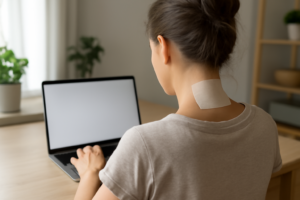
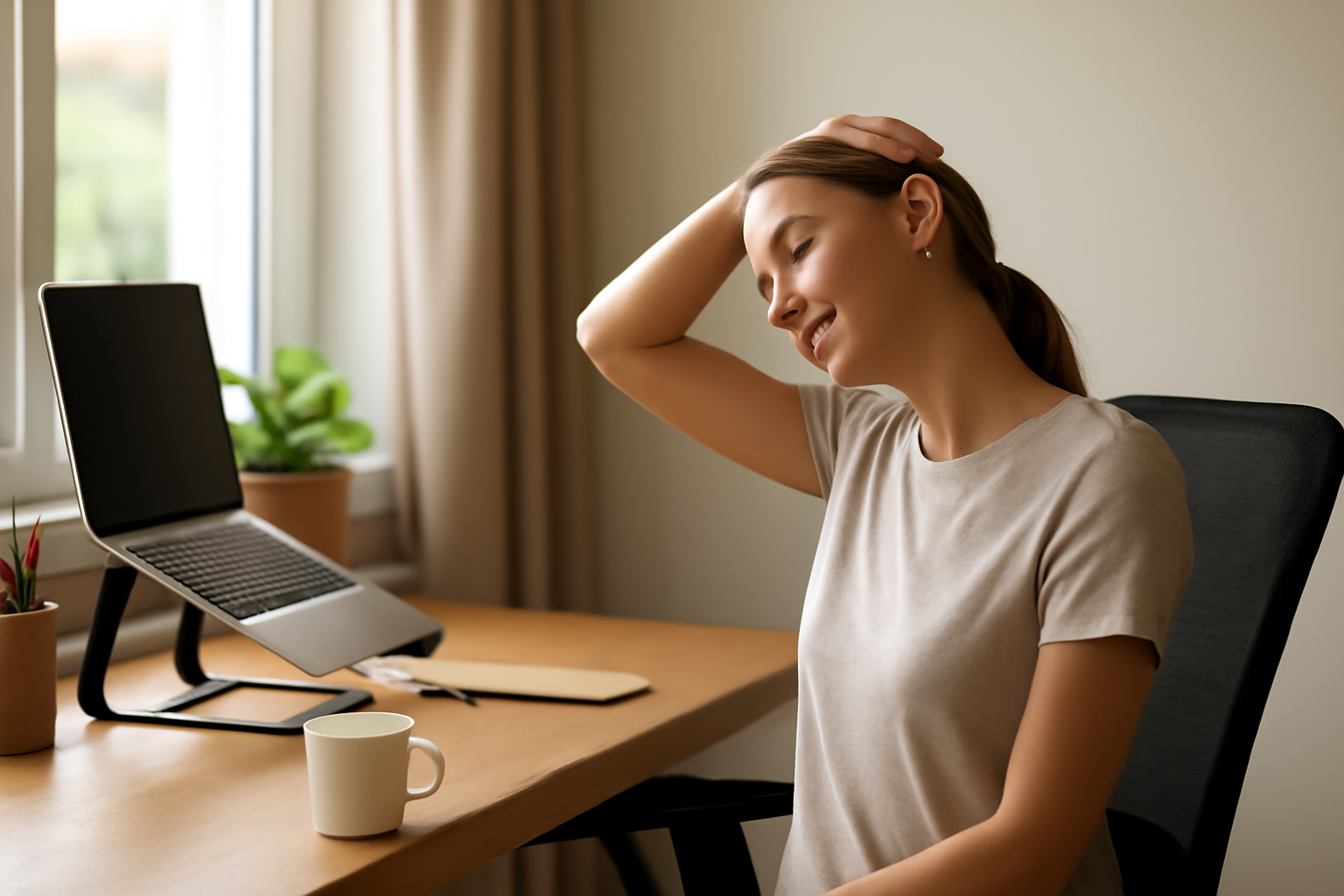

You know the feeling. It’s 3pm, you’ve been on back-to-back video calls, and you suddenly realize your neck has been quietly screaming at you for the last two hours. Maybe you’re hunched over a laptop on the kitchen table, or craning your chin toward a monitor that’s just a little too low. If work from home neck pain has become a regular part of your remote work routine, you are absolutely not alone — and more importantly, there are real, practical things you can do about it.
Why Working From Home Is Surprisingly Hard on Your Neck
Here’s something I find myself explaining constantly: the office setup most of us complained about was actually doing us a favor. Dedicated desks, monitors at eye level, ergonomic chairs — those things matter enormously for cervical spine health. When we moved to home offices, most of us traded all of that for a couch, a coffee table, or a cramped corner desk with a laptop balanced on a stack of books.
The human head weighs roughly 10 to 12 pounds in a neutral position. But for every inch your chin juts forward or drops down, the effective load on your cervical spine increases dramatically. Research suggests that tilting your head just 30 degrees forward can place the equivalent of nearly 40 pounds of pressure on the cervical vertebrae and surrounding muscles. Do that for six to eight hours a day, five days a week, and it’s no wonder your neck is done with you by Wednesday.
There are a few other home-specific culprits worth mentioning too:
- Laptop screens positioned below eye level — nearly universal in home setups
- Sitting in non-supportive chairs for far longer than intended
- Sleeping poorly due to stress, which worsens muscle tension and recovery
- Fewer natural movement breaks — no walking to a conference room, no strolling to a colleague’s desk
What Actually Helps: Habits First, Products Second
Before I get into the products I genuinely like, I want to be honest with you the way I’d be with a friend: no pillow or gadget will fix a structural problem if your daily habits are working against you. These are the foundational changes that many people find make the biggest difference.
Raise Your Screen to Eye Level
This one single change may help more than anything else on this list. The top third of your screen should sit roughly at eye level when you’re sitting upright. If you’re working from a laptop, that almost certainly means elevating it and pairing it with an external keyboard and mouse. It feels like a hassle until the first day you end without a headache.
Move Every 30 to 45 Minutes
Set a timer if you have to. Stand up, roll your shoulders back, do a few gentle chin tucks — where you gently pull your chin straight back like you’re making a double chin. It looks ridiculous and it works. Even 60 seconds of movement can help reset muscular tension and improve circulation to the cervical structures.
Be Intentional About Sleep Position
Your neck spends a third of its life on your pillow. If that pillow isn’t supporting proper cervical alignment, you may be waking up already behind the eight ball before you’ve even opened your laptop. Many people find that switching to a properly contoured cervical pillow is one of the most impactful changes they make.
Products Worth Trying for Work From Home Neck Pain
These are the specific products I’d feel comfortable recommending to someone dealing with chronic neck tension from remote work. I’ve looked for options that prioritize real ergonomic function over flashy marketing.
The Pillow That Actually Supports Your Neck While You Sleep (Not Just Feels Soft)
Your daytime posture matters, but your neck spends 8 hours a night in whatever position your pillow allows—and the wrong pillow will undo all your stretching and strengthening work. A cervical pillow that keeps your spine neutral while you sleep reduces morning stiffness and gives your upper trapezius a genuine chance to recover.
What works
- The contoured design actually maintains cervical alignment instead of letting your head sink into a flat surface—most users report noticeably less morning neck stiffness after 2-3 weeks of consistent use.
- The cooling gel layer isn’t just marketing; it helps regulate temperature throughout the night, which matters because tension in tight muscles gets worse when you’re overheating and tossing around.
- Unlike memory foam pillows that flatten after a year, this one maintains structure long enough to justify the investment if neck support is actually your priority.
What doesn’t
- The first 3-5 nights feel weird if you’re used to a standard pillow—your neck is used to being in a slightly wrong position, so correct alignment can feel unfamiliar before it feels better.
- This is support, not a cure; if your daytime posture is still terrible or your desk setup forces your head forward, a good pillow alone won’t fix the problem.
A pillow is just one piece of the puzzle—fixing work-from-home neck pain also means addressing how you sit and where your monitor lives—but sleep is non-negotiable recovery time, so getting this right matters. Check out the Ultra Pain Relief Cooling Pillow for Neck Support (Queen Size).
About This Article

Written by Michael Torres. Michael Torres has had joint problems his whole life — hypermobile as a kid, chronic sprains and a dislocating shoulder through his twenties, an osteoarthritis diagnosis in his early fifties, and a right knee replacement since. He is not a doctor or a physical therapist and has no clinical training. He writes about what has helped him and what he has watched help the people around him, and says plainly when he has not tried something himself. More about this site.
Scope and limits. Michael has no medical or clinical training — he writes about living with his own joint pain, not about treating anyone else's. Nothing here is medical advice. Talk to a doctor before starting anything new, and get seen promptly for pain that is new, severe, worsening, or comes with swelling, fever, or numbness.
Verify this against a primary source
Specifics change, and your situation may differ from the one described here. These are the authorities worth checking directly:
- NIAMS — arthritis and musculoskeletal research from the NIH
- MedlinePlus — plain-language medical reference from the NIH
- Arthritis Foundation — condition guides and treatment overviews