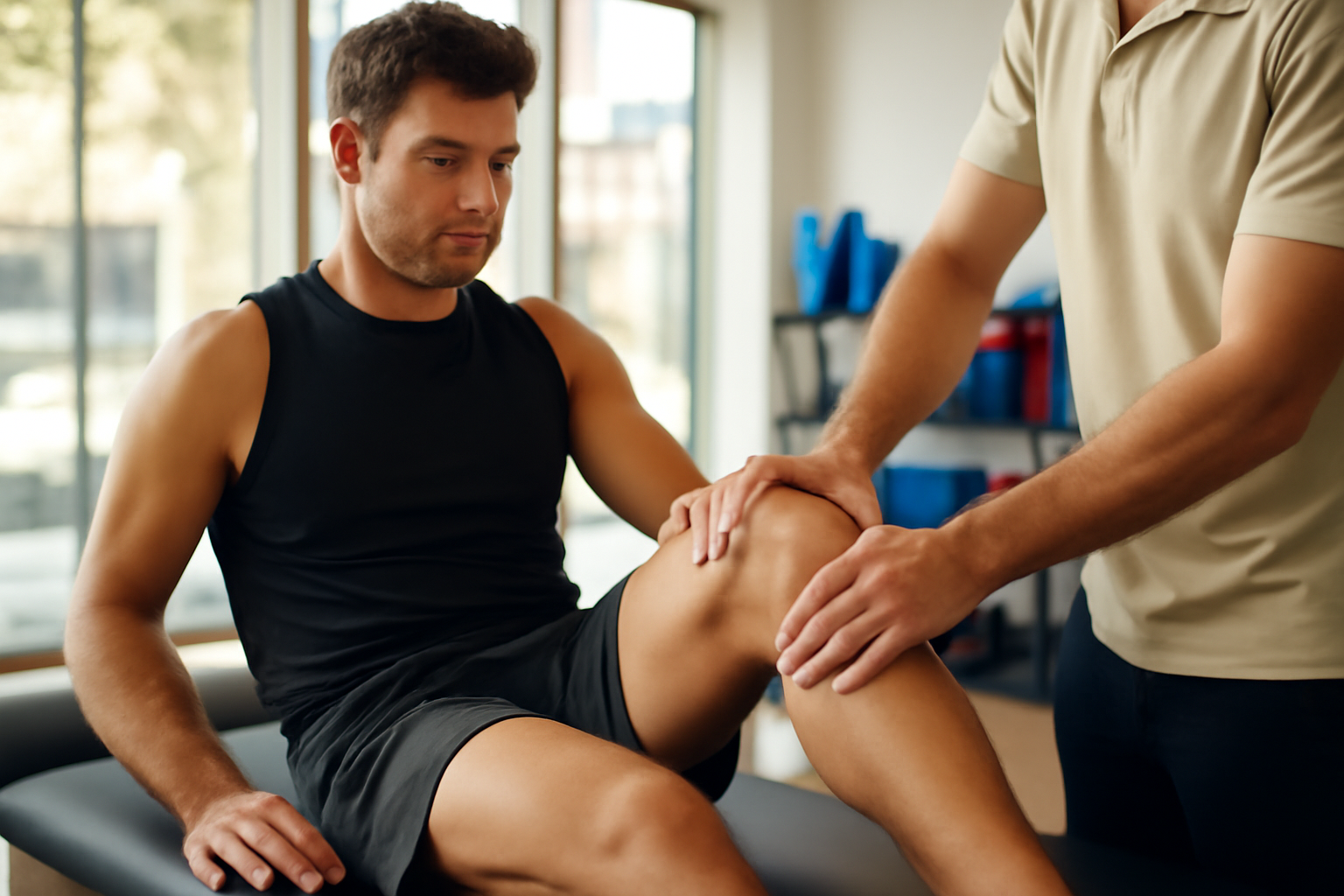

The at-home recovery gear market has genuinely gotten better in the last few years — and also more confusing. Between TENS units, percussion massage guns, compression sleeves, and cold/heat contrast devices, it’s easy to end up buying three things you don’t need and skipping the one that would actually help your joints. So let’s break down what each category of tool is actually good for, where the evidence is solid versus thin, and how I’d think about building a small home recovery kit without overspending.
How to Think About Recovery Tools: What Each Category Actually Does
Before comparing specific products, it helps to know what job each category of tool is actually built for. None of these repair tissue — that’s your body’s job, on its own timeline. What they do is manage pain, support circulation, or reduce muscle tension that’s dragging on the joint, which indirectly makes recovery easier to stick with.
TENS Units: Best for Interrupting Pain Signals
Transcutaneous electrical nerve stimulation sends low-voltage pulses through the skin that interrupt pain signals traveling to your brain and may encourage the release of endorphins. Research supports TENS for short-term pain relief in musculoskeletal conditions, and it’s one of the few electrical-stimulation categories with genuinely consistent evidence behind it. It’s a good fit if your main problem is pain intense enough to keep you from moving or stretching.
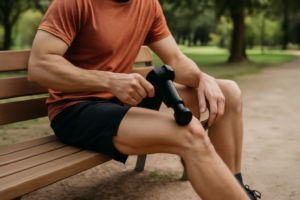
Percussion Massage Guns: Best for Muscle Tightness Around a Joint
These deliver rapid, targeted pressure into muscle tissue and can help release tightness in the muscles surrounding a joint — think tight quads pulling on a cranky knee, or a locked-up upper trap dragging on the shoulder. They work on muscle, not the joint itself, so they’re most useful as a warm-up tool or a way to loosen tissue before stretching, not as a fix for the joint pain directly.
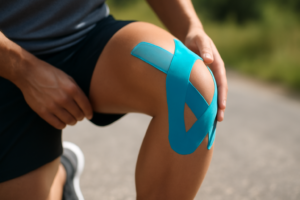
Compression Sleeves and Wraps: Best for Swelling and Support During Activity
Graduated compression can help manage mild swelling and gives a joint a sense of stability during activity, which some athletes find reduces perceived effort and discomfort. The evidence for actual performance benefit is mixed, but for day-to-day comfort and swelling management, especially post-activity, it’s a low-risk, inexpensive category worth having.
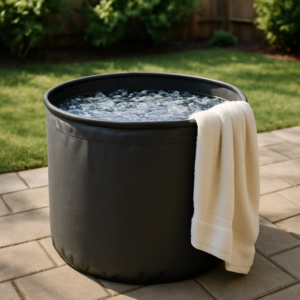
Cold/Heat Contrast Devices: Best for Chronic Stiffness Management
Newer wrap-style devices that cycle between cold and heat are essentially a more convenient version of alternating an ice pack and a heating pad. They’re genuinely useful for chronic joint stiffness that responds to temperature changes, but they’re a convenience upgrade, not a different mechanism — a basic ice pack and heating pad do the same job for a fraction of the price if budget is tight.
Building a Simple Home Recovery Kit Without Overbuying
If I were starting from zero, I’d prioritize in this order: a TENS unit first, because pain relief that lets you actually move is the highest-leverage tool on this list; a basic ice pack and heating pad second, because they’re inexpensive and cover most day-to-day needs; and a massage gun or compression sleeve third, as an add-on once you know your specific pattern of tightness or swelling. You don’t need all four categories on day one — most people find one or two tools cover 90% of what they actually reach for.
Why TENS Is Where I’d Start
Of everything on this list, a TENS unit does the one job that unlocks all the others: it gets pain low enough that you can actually stretch, foam roll, or do the mobility work your recovery depends on. That’s why it’s first on my priority list rather than an afterthought.
What works
- The gate control theory behind TENS is solid — electrical stimulation genuinely interrupts pain signals traveling to your brain, which means you can stretch and move without that sharp “don’t touch it” reflex locking everything down.
- Most people notice usable pain relief within 15–20 minutes of a session, and the effect lasts hours — long enough to actually do recovery work like foam rolling or gentle mobility without white-knuckling through it.
- The TENS 7000 has preset programs for different pain types and adjustable intensity, so you’re not guessing at settings; it’s built to start gentle and let you dial in what works for your specific joint.
What doesn’t
- TENS is a pain management tool, not a healing tool — it doesn’t reduce inflammation or rebuild cartilage, so if your joint pain is from a structural issue or overuse injury, you still need to address the underlying cause.
- Some people (especially those with certain nerve conditions or pacemakers) shouldn’t use it at all, and the electrode pads degrade over time and need replacing, which adds a small ongoing cost most people don’t factor in upfront.
Start your recovery kit here, then add the other categories above only once you know which specific problem — pain, tightness, swelling, or stiffness — you’re actually trying to solve. Check out the TENS 7000 Digital TENS Unit if you want a durable, straightforward option with good reviews from athletes who’ve stuck with it.
About This Article

Written by Michael Torres. Michael Torres has had joint problems his whole life — hypermobile as a kid, chronic sprains and a dislocating shoulder through his twenties, an osteoarthritis diagnosis in his early fifties, and a right knee replacement since. He is not a doctor or a physical therapist and has no clinical training. He writes about what has helped him and what he has watched help the people around him, and says plainly when he has not tried something himself. More about this site.
Scope and limits. Michael has no medical or clinical training — he writes about living with his own joint pain, not about treating anyone else's. Nothing here is medical advice. Talk to a doctor before starting anything new, and get seen promptly for pain that is new, severe, worsening, or comes with swelling, fever, or numbness.
Verify this against a primary source
Specifics change, and your situation may differ from the one described here. These are the authorities worth checking directly:
- NIAMS — arthritis and musculoskeletal research from the NIH
- MedlinePlus — plain-language medical reference from the NIH
- Arthritis Foundation — condition guides and treatment overviews