

Picture this: you wake up, your knees are stiff, your hips ache, and before you’ve even had your first cup of coffee, a familiar heaviness settles in — not just physical, but emotional. If you’ve been living with chronic joint pain, you know that feeling well. It’s not weakness. It’s the very real, very exhausting connection between a body that hurts and a mind that’s struggling to keep up. The good news? Research suggests that low-impact exercise mood joints share a powerful, bidirectional relationship — meaning that gentle, intentional movement may help ease both the physical discomfort and the emotional weight that so often comes with it.
Why Joint Pain and Low Mood So Often Go Hand in Hand
I’ve worked with a lot of people navigating joint pain, and one of the first things I tell them is this: what you’re feeling emotionally isn’t separate from what’s happening in your joints. It’s connected. Chronic pain — whether it’s from osteoarthritis, rheumatoid arthritis, or an old injury that never quite healed right — is one of the most well-documented triggers of depression and anxiety. And that makes complete sense when you think about it.
When pain limits your ability to do the things you love — gardening, playing with your grandkids, going for a walk with a friend — your world gets smaller. You may stop socializing. Sleep becomes harder. You feel less like yourself. Over time, that isolation and loss of identity can tip into something that looks a lot like depression. And here’s the cruel irony: depression can actually amplify pain perception, making joints feel worse than they might otherwise. It becomes a cycle that can feel genuinely impossible to break.
According to resources like Apex Medical Center’s work on mood and mental health, understanding when that low mood has crossed into clinical territory is important — and it’s always worth talking to a doctor or mental health professional if you suspect you’re dealing with more than situational sadness. But for many people, lifestyle interventions including movement can be a meaningful, research-supported first step.
How Low-Impact Exercise Mood and Joints Both Benefit from Gentle Movement
Here’s where things get genuinely encouraging. Exercise — particularly the low-impact kind — has been shown in numerous studies to release endorphins, reduce inflammatory markers, and improve sleep quality. All three of those effects matter deeply for people with joint pain who are also struggling emotionally.
The key word, of course, is low-impact. I’m not talking about pushing through pain on a treadmill or signing up for a high-intensity class that leaves your knees screaming. I’m talking about movement that respects your joints while still getting your blood flowing and your mood lifting. Some of the most effective options include:
- Swimming or water aerobics: The buoyancy of water reduces stress on joints dramatically, while still providing resistance for muscle strengthening. Many people with arthritis find pool-based exercise to be genuinely life-changing.
- Tai chi: Research suggests tai chi may help reduce joint pain, improve balance, and lower stress levels. It’s slow, deliberate, and deeply calming — a rare combination.
- Walking on soft surfaces: Even a 20-minute walk on grass or a track can deliver mood benefits. The rhythm of walking is meditative, and getting outside adds the bonus of natural light exposure, which supports serotonin production.
- Gentle yoga: Chair yoga or restorative yoga can improve flexibility around joints, ease morning stiffness, and activate the parasympathetic nervous system — essentially telling your body it’s safe to relax.
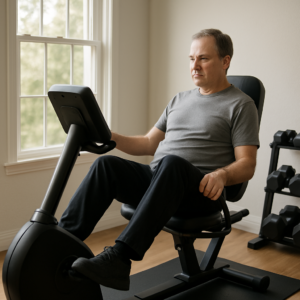
- Cycling (stationary or outdoor): Low-impact on knees and hips when properly fitted, cycling gets your heart rate up and endorphins flowing without the jarring impact of running.
The goal is consistency over intensity. Even three sessions of 20–30 minutes per week may help shift both your pain levels and your mood over time. Start smaller than you think you need to. That’s not giving up — that’s being smart.
Managing the Stress Layer: Why It Matters for Your Joints
Stress is worth its own conversation here, because it’s often the hidden driver behind both worsening joint pain and declining mood. When you’re stressed, your body produces cortisol, and chronically elevated cortisol has been linked to increased inflammation — which is bad news if your joints are already dealing with an inflammatory condition. Stress management isn’t a luxury for people with joint pain. It’s part of the treatment plan.
Beyond movement, many people find that supporting their nervous system with some additional tools helps them stay more consistent with exercise and recovery habits. That’s where a few well-chosen supplements may play a supporting role — not as replacements for medical care, but as gentle allies in the bigger picture.
The Omega-3 Anti-Inflammatory Foundation That Actually Shows Up in Joint Pain Research
If exercise is going to help your mood and joints, your body needs the baseline tools to reduce the inflammation that’s working against both. Omega-3s — specifically EPA and DHA — have solid research behind them for joint inflammation and mood support, which is why I think of fish oil less as a “supplement” and more as a nutritional gap-filler for joint health.
What works
- Research consistently shows that 2–3 grams of EPA/DHA daily reduces inflammatory markers and joint pain over 8–12 weeks — this is one of the few supplements with real dose-response data behind it.
- The lemon flavoring means you’re not choking down a fishy aftertaste for months, which matters because consistency is everything with anti-inflammatory supplements.
- 2000mg is a functional dose without requiring you to swallow a handful of capsules — realistic enough that most people actually stick with it.
What doesn’t
- It’s not fast: the anti-inflammatory effects take 6–8 weeks to show up meaningfully, which is why people often abandon fish oil thinking it doesn’t work when they’ve only taken it for three weeks.
- If you’re on blood thinners or have a bleeding disorder, you need to talk to your doctor first — omega-3s have mild anticoagulant properties, and I’m not going to soft-pedal that.
Fish oil is a foundation, not a cure — you still have to do the exercise work and address the underlying joint mechanics, but without adequate omega-3s, you’re fighting inflammation with one hand tied behind your back. Country Life Omega 3 Fish Oil — 2000mg with Natural Lemon Flavor
About This Article

Written by Michael Torres. Michael Torres has had joint problems his whole life — hypermobile as a kid, chronic sprains and a dislocating shoulder through his twenties, an osteoarthritis diagnosis in his early fifties, and a right knee replacement since. He is not a doctor or a physical therapist and has no clinical training. He writes about what has helped him and what he has watched help the people around him, and says plainly when he has not tried something himself. More about this site.
Scope and limits. Michael has no medical or clinical training — he writes about living with his own joint pain, not about treating anyone else's. Nothing here is medical advice. Talk to a doctor before starting anything new, and get seen promptly for pain that is new, severe, worsening, or comes with swelling, fever, or numbness.
Verify this against a primary source
Specifics change, and your situation may differ from the one described here. These are the authorities worth checking directly:
- NIAMS — arthritis and musculoskeletal research from the NIH
- MedlinePlus — plain-language medical reference from the NIH
- Arthritis Foundation — condition guides and treatment overviews